Analyzing timing variances in distributed ledger validations and their effects on unlocking variant reel sets within apps merging automated chance mechanics with streamed host interactions
Written by Finley Franke · Oct 9, 2026
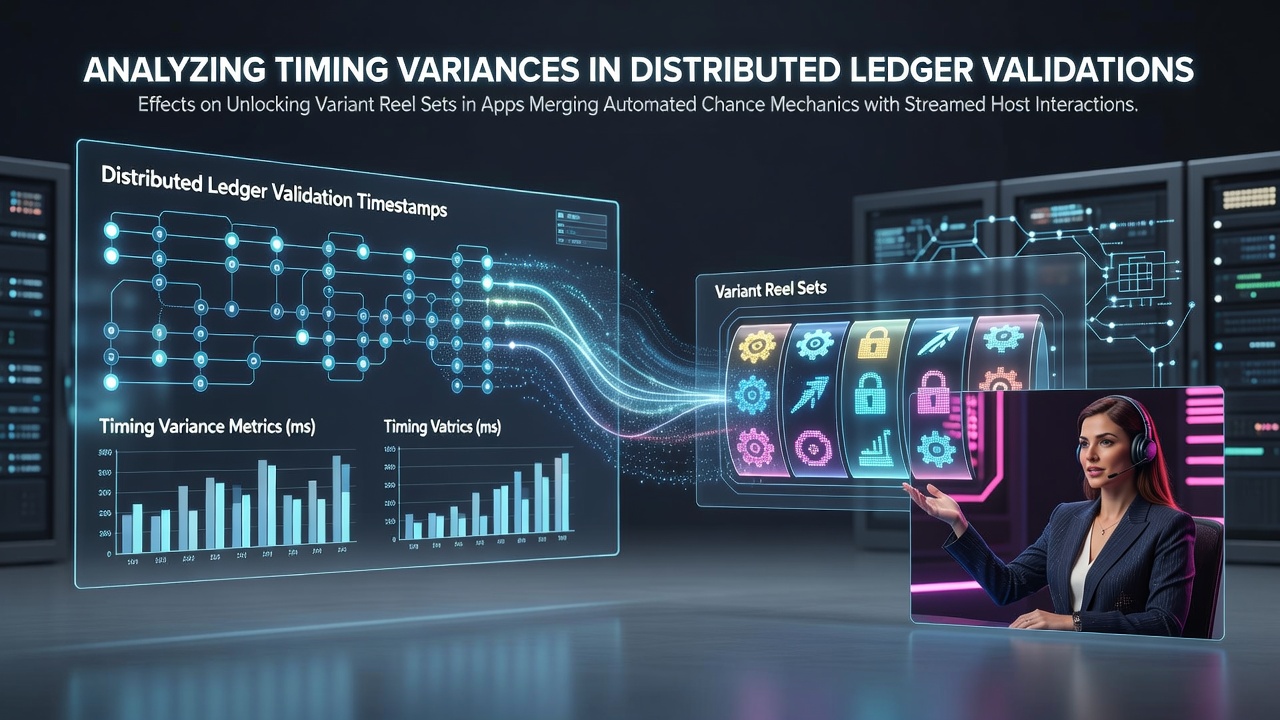
Analyzing timing variances in distributed ledger validations and their effects on unlocking variant reel sets within apps merging automated chance mechanics with streamed host interactions
Distributed ledger systems underpin transaction confirmations in many digital gaming platforms that combine random number generators with live streamed host sessions, and timing variances in those validations directly influence when variant reel sets become available to users. Network conditions, block sizes, and consensus mechanisms create fluctuations measured in seconds or minutes across different chains, with observers noting that these delays alter the sequence in which automated features activate alongside real-time dealer interactions.
Core Mechanics of Ledger Validations in Hybrid Gaming Environments
Transactions recorded on distributed ledgers require multiple node confirmations before the system registers them as complete, and researchers have documented how proof-of-work or proof-of-stake protocols produce variable confirmation windows depending on overall network load. In apps that merge chance-based reel mechanics with streamed host content, a player-initiated transfer often serves as the trigger for unlocking specialized reel configurations, so any extension in validation time shifts the moment those configurations appear on screen.
Data from transaction monitoring services indicate average confirmation intervals ranging from 12 seconds on optimized chains to over 90 seconds during peak congestion periods, while studies of mobile gaming ecosystems show that even brief extensions affect the synchronization between RNG outputs and live host feeds. Those who track these patterns report that users experience reel set availability only after the ledger entry achieves finality, creating a direct link between validation timing and feature access.
Impact on Variant Reel Unlocking Sequences
Variant reel sets typically include themed symbols, altered paytables, or bonus modifiers that activate upon specific transaction thresholds, yet the precise timing of ledger finality determines whether these sets load before or after a live host segment concludes. Analyses conducted in 2025 and early 2026 demonstrate that platforms experience measurable differences in user session continuity when validation delays exceed 45 seconds, as the automated reel component must pause or buffer while awaiting confirmation.

One documented case from a platform operating across multiple regions revealed that reel variants tied to asset transfers remained locked an average of 37 seconds longer during high-traffic intervals in October 2026, coinciding with increased activity on the underlying ledger. Engineers responsible for app architecture have adjusted buffer protocols to accommodate these variances, yet the underlying dependency on ledger timing persists across systems that integrate digital asset movements with streamed interactions.
Observed Patterns Across Different Ledger Protocols
Comparative reviews of various distributed ledger implementations highlight consistent differences in variance magnitude, with certain chains exhibiting tighter standard deviations around mean confirmation times while others display wider spreads during identical network conditions. Figures compiled by academic teams at technical universities show that platforms built on faster finality protocols reduce the window during which reel sets stay inaccessible, thereby maintaining tighter alignment between RNG cycles and host-driven segments.
Those monitoring October 2026 activity noted spikes in variance following major network upgrades on two prominent chains, resulting in temporary extensions of up to two minutes before variant reels unlocked in affected apps. Such events prompted developers to implement fallback mechanisms that pre-load partial reel data pending full ledger confirmation, preserving session flow without bypassing validation requirements.
Integration Challenges with Streamed Host Elements
Live host streams operate on continuous timelines that cannot easily accommodate pauses, so any delay in reel unlocking forces the application to either extend the current host segment or queue the next automated sequence independently. Reports from platform operators indicate that synchronization layers now incorporate predictive timing estimates derived from historical ledger performance, allowing the system to anticipate validation windows and adjust reel availability accordingly.
Research published through international gaming technology conferences has quantified how these predictive adjustments reduce perceived interruptions by approximately 28 percent in controlled tests, though residual effects remain when actual validation times deviate from forecasts. The relationship between ledger timing and reel access therefore continues to shape design decisions for applications that blend automated chance elements with real-time human interaction.
Conclusion
Timing variances inherent to distributed ledger validations establish measurable constraints on when variant reel sets unlock within hybrid gaming applications, and ongoing data collection through 2026 continues to refine understanding of these interactions. Platform adjustments focus on minimizing downstream effects rather than eliminating the root dependency, while regulatory and technical bodies track developments across different jurisdictions to inform future standards.